

Are you a creator, coach, or small business owner who has been uploading videos for months and still cannot get past a few hundred views?
Most views on YouTube never come from your subscribers. The YouTube algorithm uses recommendations to help viewers discover videos beyond search and subscriptions. Your subscriber count is the result of growth, not the engine behind it. (Source: On YouTube’s recommendation system)
That one fact changes the answer to how to grow a YouTube channel fast. Speed comes from getting a handful of videos recommended widely, not from uploading more often.
How Long Does It Take to Grow a YouTube Channel?
90 days is enough time to change your channel’s direction, but there is no way to guarantee a specific number of subscribers in that time. Anyone who promises one is only guessing.
Channel growth is not always consistent. Some videos may get a small number of views, while one video can suddenly reach a much larger audience and bring in more subscribers.
The honest answer to YouTube SEO and how to grow a YouTube channel fast starts with resetting what fast means. Fast does not mean steady weekly gains. Real speed is shortening the gap between the video you publish today and the one that finally connects.
Set your target accordingly. Rather than chasing a subscriber count over the next 90 days, aim to publish three or four videos with a genuine chance of being recommended, then study what each one did.
Most people expect regular effort to bring predictable growth every week. In reality, YouTube channels often grow unevenly. Focus on creating videos that reach new viewers and keep improving your chances of growth.
Where Does YouTube Channel Growth Come From?
Growth mainly comes from recommendations, such as videos shown on the homepage or in the Up Next section. Search also brings viewers, but recommendations can reach a much larger audience.
Two things are important to understand:
Subscribers are not reach: Your subscriber count does not determine how many people see your next video. Each upload is evaluated separately.
Every video has a new opportunity: A strong video can reach people who have never heard of your channel, even if you have only 50 subscribers.
Instead of focusing only on gaining subscribers, focus on making videos that people want to watch. Subscribers usually come as your videos reach more viewers.
Which signals decide whether YouTube recommends your video?
YouTube predicts what a viewer will find satisfying using clicks, watch time, survey responses, shares, likes, and dislikes.
Watch time deserves your attention here. YouTube added it as a signal in 2012 after learning that a click does not mean somebody watched. Someone clicks your title, realizes the video is not what the thumbnail promised, and leaves after nine seconds. YouTube reads that as a poor result and slows the video down.
Understanding that pairing is most of how to grow a YouTube channel fast. Your title and thumbnail earn the click. The first minute decides whether the click was worth anything.
Where are your views coming from right now?
Open YouTube Studio Analytics, select Reach, and look at your traffic sources. Whatever sits at the top tells you which problem you actually have.
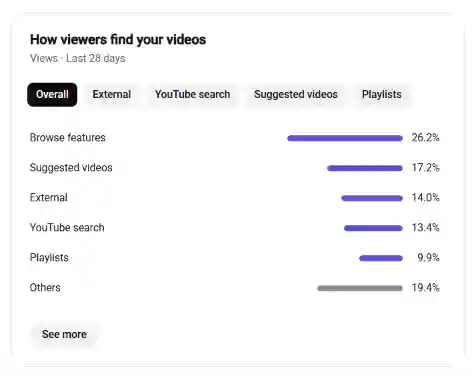
Browse features and Suggested videos at the top: YouTube is already recommending you, so your job is retention and publishing more of what worked.
YouTube search at the top: Recommendations have not picked you up yet, which usually points to packaging or a topic too narrow to interest anyone outside the search.
External and Direct at the top: Your growth is coming from you, through sharing and promotion, and the platform is not distributing your videos at all.
Traffic sources tell you which part of how to grow a YouTube channel fast applies to you today. Spending three months fixing thumbnails helps nobody whose real problem is topic choice.
Pick a Topic People Are Already Searching For
YouTube keyword research helps you find topics with existing demand, because no amount of editing rescues a video nobody wanted.
Spend ten minutes on this before your next video:
YouTube Search: Type your topic into YouTube and check the autocomplete suggestions. These are phrases people actually search for.
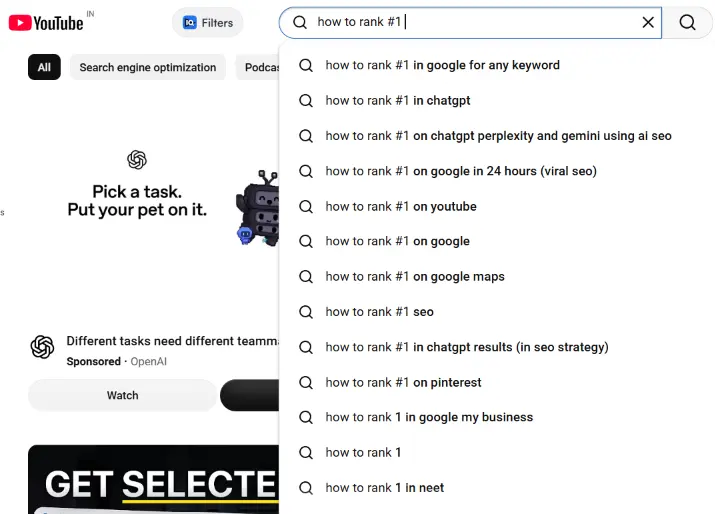
Recent Videos: Search your topic, use Filters, and sort by upload date. Check whether recent videos are getting views.
Competition: Check the subscriber counts of channels ranking on the first page.
Best YouTube SEO Tools: Use YouTube Search for real search ideas and vidIQ to check demand and competition.
Step three matters most. If small channels are ranking above larger ones, it shows that the topic is possible to compete for.
Specific beats broad: A channel with 120 subscribers and around 200 views per video will struggle with a broad topic like “how to edit videos.” A more specific topic like “how to edit podcast clips in CapCut on a phone” has less competition and targets viewers who are looking for that exact solution.
Choosing the right topic is one of the most important parts of growing a YouTube channel, and it only takes a few minutes of research.
Make the Click Easy
Write a title and build a thumbnail that make one clear promise the video actually keeps. Anything beyond that promise costs you.
Most advice on how to grow a YouTube channel fast starts here, with packaging. Packaging matters, though it only pays off once the topic already has demand behind it.
Overselling is the common mistake. An exaggerated title may increase YouTube CTR, but if viewers leave quickly, watch time can suffer. Honest titles and thumbnails may get fewer clicks, but they are more likely to bring the right viewers.
Read your title and thumbnail together. A viewer should quickly understand what the video offers and why they should watch.
Find the Exact Moment Viewers Leave Your Video
Open the key moments for audience retention report in YouTube Studio, which shows precisely where people stopped watching. Go to Content, select a video, choose Analytics, then Engagement.
Your video needs at least 60 seconds of runtime and 100 views for the report to appear. Once the data is available, you can use it to see where viewers are leaving.
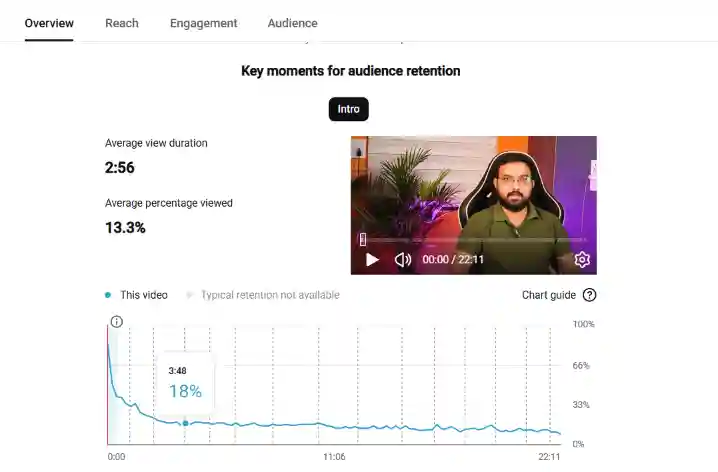
What matters is where viewers drop off:
Steep early drop: Your opening may not match what the title promised. Focus on improving the first 15 seconds.
Sudden mid-video dip: Look at what happens at that point. It could be a long introduction, a tangent, or a sponsor section.
Slow, gradual decline: This is normal and does not always mean something needs fixing.
Fix one issue, publish the next video, and check the same report again. Over time, this YouTube channel optimization process helps you understand what works for your audience and improve your videos.
Shorts vs. Long-Form: Which Grows a YouTube Channel Faster?
Short-form video grows your view count faster, and long-form grows your channel faster. Both belong in the plan, and they do different jobs.
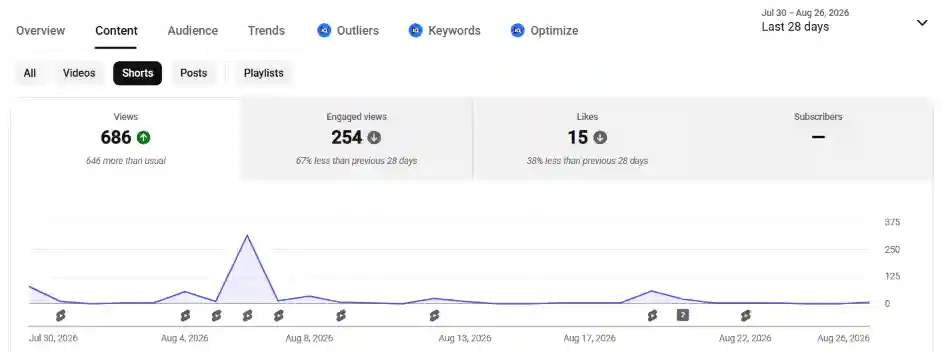
Anyone working out how to grow a YouTube channel fast eventually asks which format to commit to. Shorts reach enormous audiences, and YouTube reported in January 2026 that Shorts averages 200 billion daily views. Reach at that scale comes with weak intent, because someone swiping through a feed rarely stops to subscribe.
Shorts views from the Shorts feed do not count toward the 4,000 public watch hours needed for monetization. So millions of Shorts views alone may not qualify a channel for ad revenue. (Source: YouTube Partner Program overview & eligibility)
| Factor | Shorts | Long-form |
| Speed of reach | Fast, often within hours | Slower, builds over weeks |
| Subscribers per view | Low | High |
| Counts toward watch hours | No | Yes |
| Best used for | Finding new viewers | Converting them into an audience |
Studio also reports a “Viewed (vs. swiped away)” figure for every Short, which isolates your first three seconds as the only variable that moved. Change the opening line, post again, compare the two numbers.
Use Shorts as the front door and long-form as the room people stay in.
Why the Next Few Months Matter Most for Your Channel
YouTube is doubling its monetization entry requirements on February 1, 2027, which makes reaching the current thresholds before then considerably easier than reaching them afterward.
| Requirement | Now | From February 1, 2027 |
| Subscribers | 1,000 | 1,000 |
| Watch hours route | 4,000 in 12 months | 8,000 in 365 days |
| Shorts route | 10 million in 90 days | 20 million in 90 days |
Creators already in the YouTube Partner Program keep their status and are not affected. New channels face the higher bar.
Think about what that means for your channel. 4,000 watch hours equals 240,000 minutes. If your videos average eight minutes of watch time per view, you need about 30,000 views over 12 months to reach 4,000 hours.
For anyone learning how to grow a YouTube channel fast in 2026, tracking your progress toward that 12-month watch-hour requirement gives you a clear target to work toward.
What Slows YouTube Channel Growth Down?
Three habits can slow down your YouTube channel growth:
Publishing too much without quality: Focus on useful, original videos instead of uploading just for the sake of volume.
Buying or trading subscribers: These subscribers are unlikely to watch your videos, which can hurt your overall performance.
Changing everything at once: If you change your titles, thumbnails, topics, and format together, you won’t know what made the difference. Test one change at a time.
Frequently asked questions
1. How long does it take to get 1,000 subscribers?
No fixed timeline exists for how to grow a YouTube channel fast. Reaching 1,000 subscribers depends on topic demand and how well your videos hold viewer attention.
2. How many videos should you post per week?
One well-researched video weekly beats three rushed ones. Upload frequency helps only when each video holds attention. Posting daily with weak retention teaches YouTube to stop recommending your channel.
3. Do YouTube Shorts help or hurt long-form growth?
Shorts help reach and rarely hurt long-form growth. Views from the Shorts feed do not count toward the 4,000 watch hours needed for monetization, so treat Shorts as discovery.
4. Why did my YouTube views suddenly drop?
View drops usually mean recent videos held attention less well, so YouTube reduced recommendations. Check audience retention in Studio and compare your last five videos before changing anything else.
5. Do subscribers still matter on YouTube?
Subscribers matter for repeat views and monetization thresholds, though they do not control reach. Anyone learning how to grow a YouTube channel fast should track retention and traffic sources first.
Conclusion
For the next 30 days, focus on three videos instead of twelve. Research each topic before filming, make sure the video delivers on its promise, and check the retention report afterward to see where viewers leave.
Learning how to grow a YouTube channel fast means paying attention to what your audience responds to. Use what you learn from each video to improve the next one.
Also Read: How to Get 4,000 Watch Hours on YouTube Faster: Top 10 Hacks